




Reel-Format Films for Packaging: Advantages, Applications, and Formats
Reel-format films are one of the most widely used solutions in flexible packaging. They are supplied as rolls wound onto a core and are designed to be processed on automatic or semi-automatic lines, or in subsequent converting operations.
The reel enables continuous material feed, making packaging more efficient and adaptable across different sectors: food, cosmetics, pharmaceuticals, industrial, and technical. The right film choice shapes package quality, production continuity, heat sealability, print quality, and product protection.
For businesses packaging products at scale, in small batches, or in customised formats, reel-format film is a flexible, configurable solution tailored to the application.
What Reel-Format Films Are
Reel-format films are flexible materials wound into rolls and intended for printing, lamination, slitting, rewinding, or packaging processes. They can be made from single-layer plastic materials, multilayer structures, plastic laminates, or paper-plastic laminates.
The reel is designed around several technical parameters:
- Material used
- Film gauge
- Reel width
- Outer diameter
- Core type
- Surface treatment
- Required printing or finish
- Compatibility with the packaging machine
Every detail contributes to correct film processing and the final quality of the packaging.
Advantages of Reel-Format Films for Packaging
The main advantage of reel-format film is processing continuity. The material can be fed directly into production lines, reducing interruptions and facilitating packaging management.
The most significant benefits include:
- Greater efficiency in production processes
- Good adaptability to different formats
- Custom printing options
- Precision in slitting and sealing
- Waste reduction when the material is correctly designed
- Compatibility with small batches and large volumes
- Ability to develop bespoke technical structures
A correctly produced reel helps maintain consistent package quality and improve line regularity.
Applications in the Food Industry
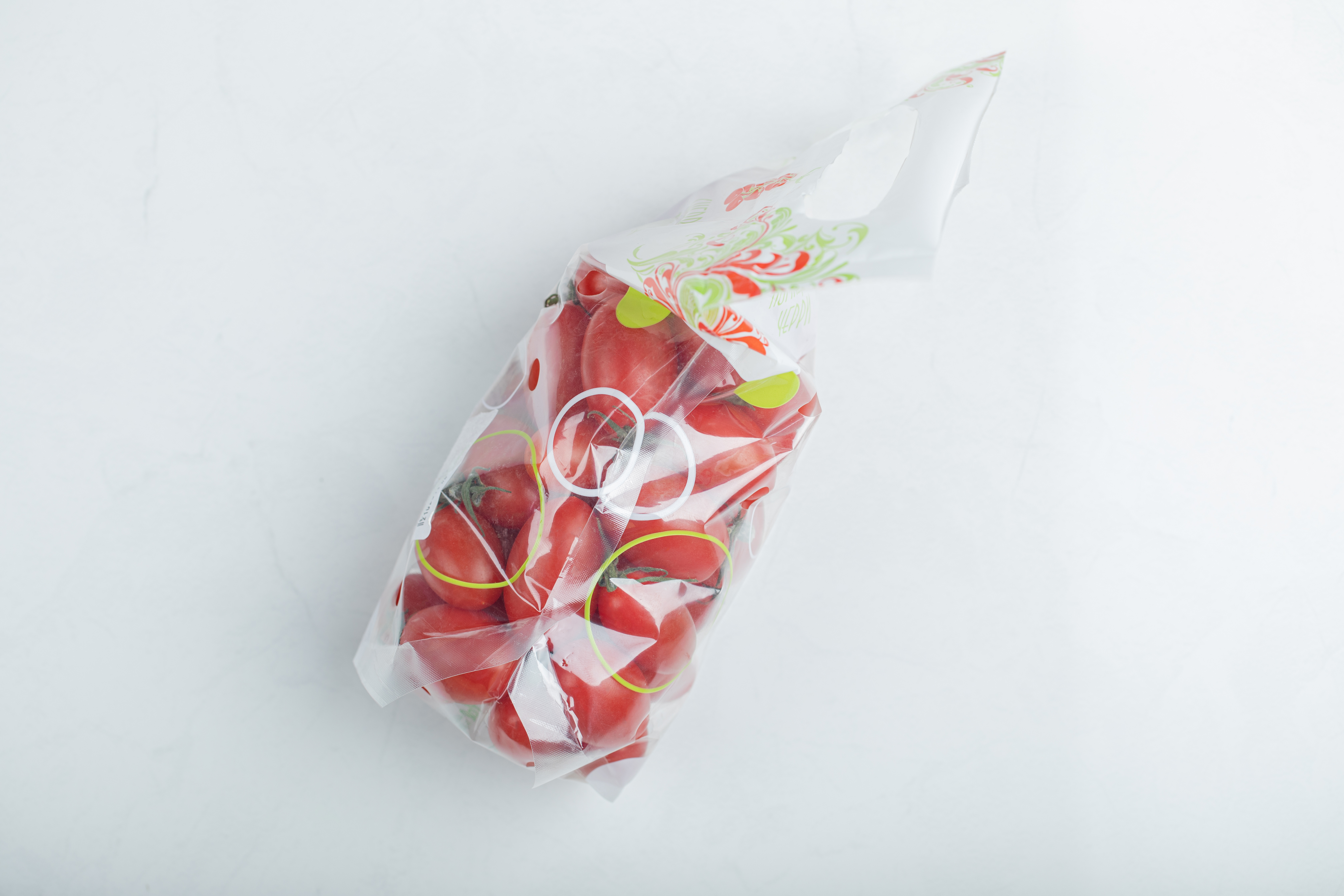
In the food industry, reel-format films are used to package fresh, dry, processed, or ready-to-eat products. Material selection depends on the product and the required performance in terms of preservation, barrier properties, heat sealability, and strength.
The most common applications include:
- Fresh pasta and dry pasta
- Bakery products and snacks
- Flours, cereals, and dry goods
- Salads and fruit & vegetables
- Delicatessen and ready meals
- Products packaged in flow pack or tray format
For fresh foods, antifog films, materials with barrier properties, or multilayer structures can be used. For dry goods and bakery products, on the other hand, strength, processability, and visual appeal become the priorities.
Applications in the Cosmetics Industry
In cosmetics, reel-format films are particularly suited to small formats, promotional packages, and single-use products. Samples, sachets, single-dose formats, creams, gels, and hotel amenity lines require precise, printable materials suited to carefully considered processing.
Reels can be developed for:
- Cosmetic samples
- Single-dose sachets
- Creams and lotions
- Cleansers and liquid products
- Hotel and spa amenity lines
- Promotional kits and product launches
In this industry, graphic quality matters as much as content protection. Even on small surfaces, printing, colours, and texts must be legible and in keeping with the brand identity.
Pharmaceutical and Technical Applications
Reel-format films can also be used for pharmaceutical, medical, industrial, and technical applications. In these cases, priority is often given to protection, material stability, format precision, and process continuity.
Applications can include:
- Secondary packaging
- Protective packaging
- Sensitive products
- Technical components
- Industrial materials
- High-performance multilayer structures
Material selection must be assessed according to the conditions of use and the characteristics required by the product.
Available Materials
Reel-format films can be made from different materials, selected according to the required performance.
Polyethylene is used for its flexibility, strength, and good heat sealability. Polypropylene offers transparency, lightness, and good visual appeal. Polyester guarantees dimensional stability, strength, and print quality. Nylon is chosen when high barrier properties and mechanical strength are required.
These are complemented by COEX films, antifog films, primer-coated films, double-sided coated films, biodegradable materials, compostable materials, PLA, plastic laminates, and paper-plastic laminates.
Each material can be used individually or combined with others to achieve higher-performance structures.
Reel Formats and Customisation
The reel format must be defined according to the machine being used and the type of package to be produced. Width, diameter, core, winding direction, and material characteristics must all be matched to the production process.
Customisation can cover:
- Reel width
- Film gauge
- Outer diameter
- Core type
- Surface treatment
- Custom printing
- Print finishes
- Single-layer or multilayer structure
Correctly defining the format helps improve processability and reduce issues during packaging.
Printing, Slitting, and Rewinding
Flexographic printing makes it possible to customise reel-format film with graphics, logos, technical information, product texts, and identification codes. It is a crucial processing step for food, cosmetics, and retail-bound packaging.
Slitting and rewinding, on the other hand, deliver reels with the widths, formats, and characteristics suited to the customer's production line.
These processes determine:
- Format precision
- Print quality
- Stability during unwinding
- Compatibility with the machine
- Final quality of the package
A correctly processed reel supports process continuity and the quality of the finished packaging.
When to Choose a Bespoke Reel-Format Film
A bespoke reel-format film is the right choice when packaging must meet specific product, format, or process requirements. It is a useful option for businesses working with dedicated packaging lines, custom graphics, technical materials, or variable volumes.
A customised solution is worth considering when the requirement is for:
- Greater precision on the line
- Custom printing
- Custom formats
- Small batches or large volumes
- Barrier or antifog properties
- Improved heat sealability
- Greater film strength
- Laminated or multilayer structures
A technical consultation makes it possible to define the most suitable material and avoid standard solutions that are poorly matched to the application.
Reel-Format Films and Production Continuity
The quality of a reel-format film is also measured during packaging. Slip properties, winding regularity, material stability, and cut precision are all elements that affect production continuity.
A correctly developed material helps reduce machine downtime, waste, sealing defects, and graphic alignment issues.
For this reason, reel design must take into account not only the product to be packaged, but also the machine, the line speed, the final format, and the operating conditions.
Develop Reel-Format Films for Your Packaging
Reel-format films offer a flexible, efficient, and customisable solution for numerous packaging applications. Material, format, printing, and processing must all be matched to the product and the production process.
Cipolla Fratelli develops reel-format plastic films and laminated materials, with bespoke solutions for food, cosmetics, pharmaceuticals, industrial applications, and technical uses.
A technical consultation makes it possible to identify the most suitable material, optimise the format, and improve packaging quality.
Request Information
Speak to an Expert
You may also be interested in...